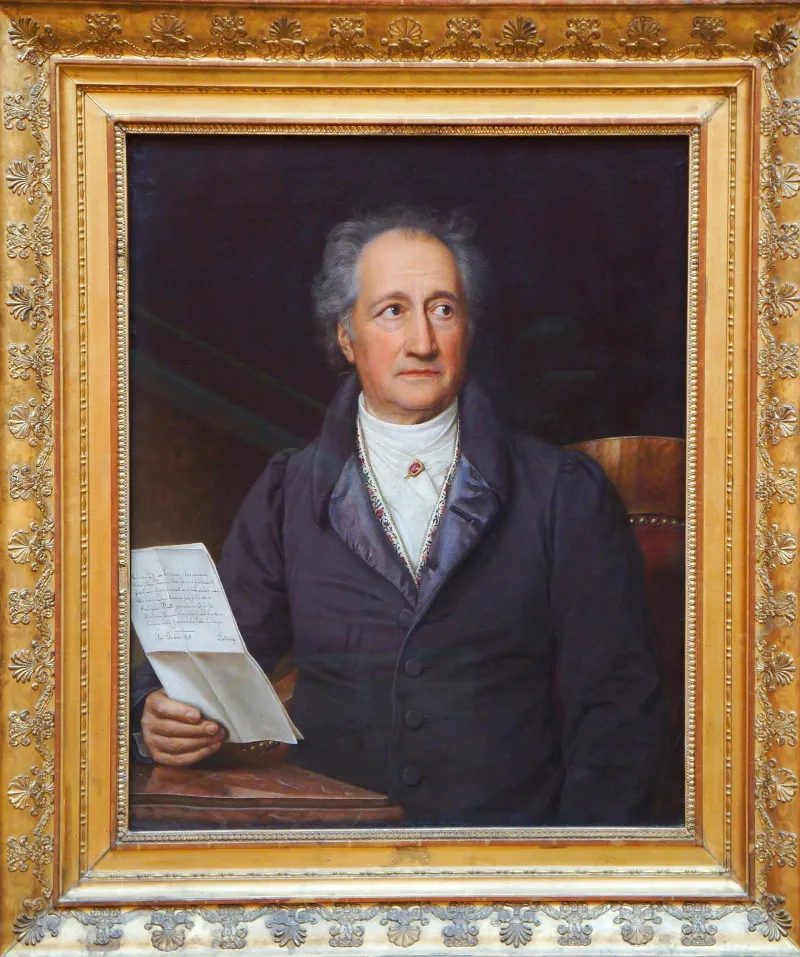

He has arrived in the capital of the world after hurrying through Florence, and means to see Rome with his own eyes.
Well, at last I am arrived in this great capital of the world. If fifteen years ago I could have seen it in good company, with a well informed guide, I should have thought myself very fortunate. But as it was to be that I should thus see it alone, and with my own eyes, it is well that this joy has fallen to my lot so late in life.
Over the mountains of the Tyrol I have as good as flown. Verona, Vicenza, Padua, and Venice I have carefully looked at; hastily glanced at Ferrara, Cento, Bologna, and scarcely seen Florence at all. My anxiety to reach Rome was so great, and it so grew with me every moment, that to think of stopping anywhere was quite out of the question; even in Florence, I only stayed three hours. Now I am here at my ease, and as it would seem, shall be tranquillized for my whole life; for we may almost say that a new life begins when a man once sees with his own eyes all that before he has but partially heard or read of. All the dreams of my youth I now behold realized before me; the subjects of the first engravings I ever remember seeing (several views of Rome were hung up in an ante-room of my father's house) stand bodily before my sight, and all that I had long been acquainted with through paintings or drawings, engravings, or wood-cuts, plaister-casts, and cork models are here collectively presented to my eye. Wherever I go I find some old acquaintance in this new world; it is all just as I had thought it, and yet all is new; and just the same might I remark of my own observations and my own ideas. I have not gained any new thoughts, but the older ones have become so defined, so vivid, and so coherent, that they may almost pass for new ones.
When Pygmalion's Elisa, which he had shaped entirely in accordance with his wishes, and had given to it as much of truth and nature as an artist can, moved at last towards him, and said, "I am!"—how different was the living form from the chiselled stone.
In a moral sense, too, how salutary is it for me to live awhile among a wholly sensual people, of whom so much has been said and written, and of whom every stranger judges according to the standard he brings with him. I can excuse every one who blames and reproaches them; they stand too far apart from us, and for a stranger to associate with them is difficult and expensive.