

Goethe here
September 28, 1786 – October 14, 1786
Italian journey
March 31, 1790 – May 22, 1790
waiting for Anna Amalia
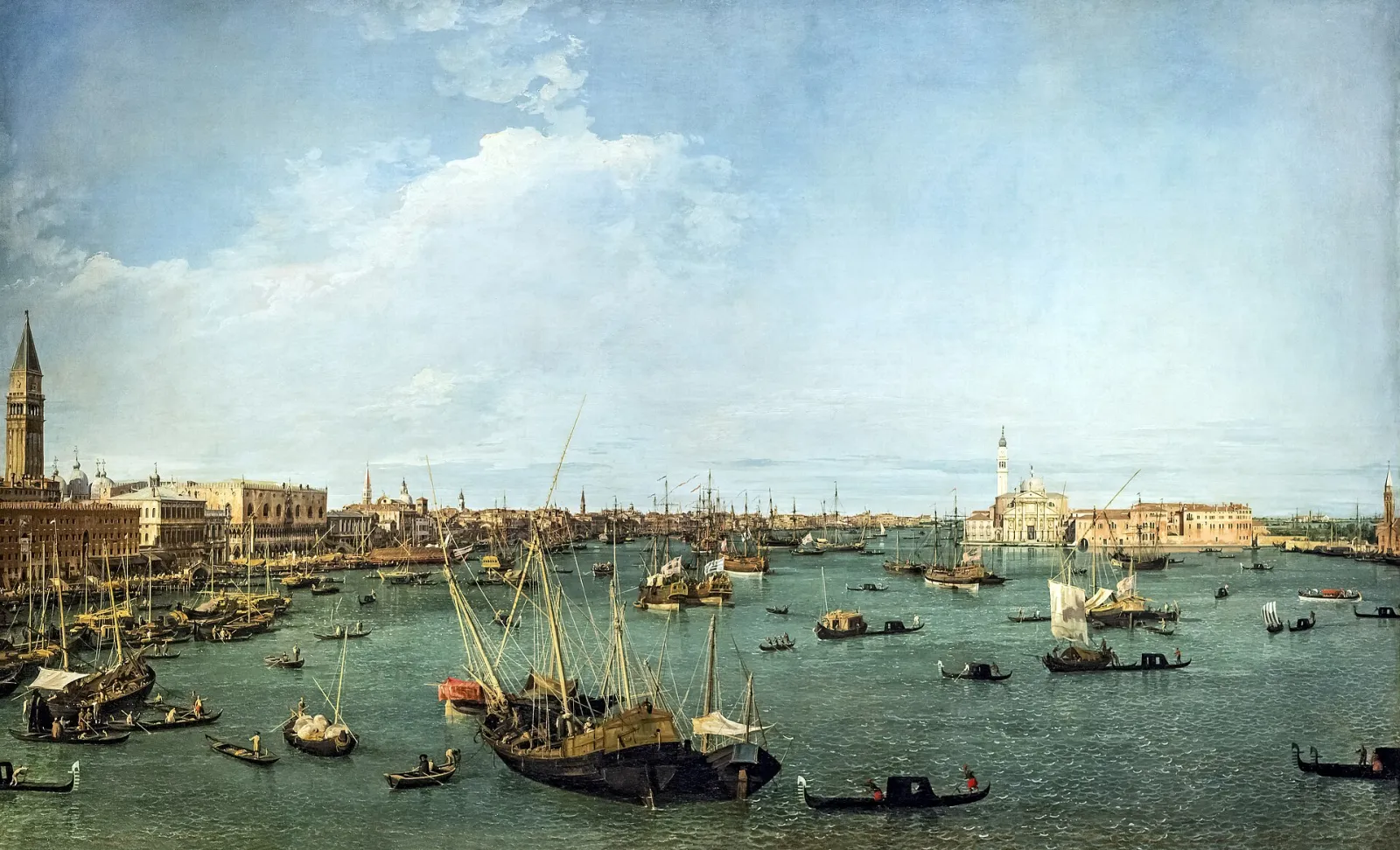
Goethe reached Venice by boat from Padua along the Brenta on 28 September 1786 and stayed until 14 October. It was his first sight of the sea. He lodged at the inn 'Queen of England' near the Rialto and explored the city on foot and by gondola, delighting in its unique character as a work of collective human effort built on water.
He studied Palladio's churches – San Giorgio Maggiore, Il Redentore – and the unfinished convent of the Carità, which he admired as an ideal of ancient architecture recreated. He went to the theatre almost every evening, saw comedies by Goldoni and Gozzi and heard the gondoliers sing alternating verses of Tasso across the water. On the Lido he walked by the sea for the first time and collected shells and crabs, observing the life of the shore. He also visited the Arsenal and the law courts, and was fascinated by the theatrical character of public life.
Goethe came back to Venice in the spring of 1790, from 31 March to late May, to meet Duchess Anna Amalia on her return from Italy and escort her home. This second stay was very different: he was impatient, missed Christiane and his infant son, and saw the city with a sharper, more critical eye. The Venetian Epigrams (1796), many of them written in these weeks, are witty, sensual and often sarcastic about religion, politics and the Revolution. On the Lido in 1790, according to his later account, the sight of a broken sheep's skull gave him the idea that the bones of the skull developed from vertebrae.
The historic city and its lagoon have been a UNESCO World Heritage site since 1987.