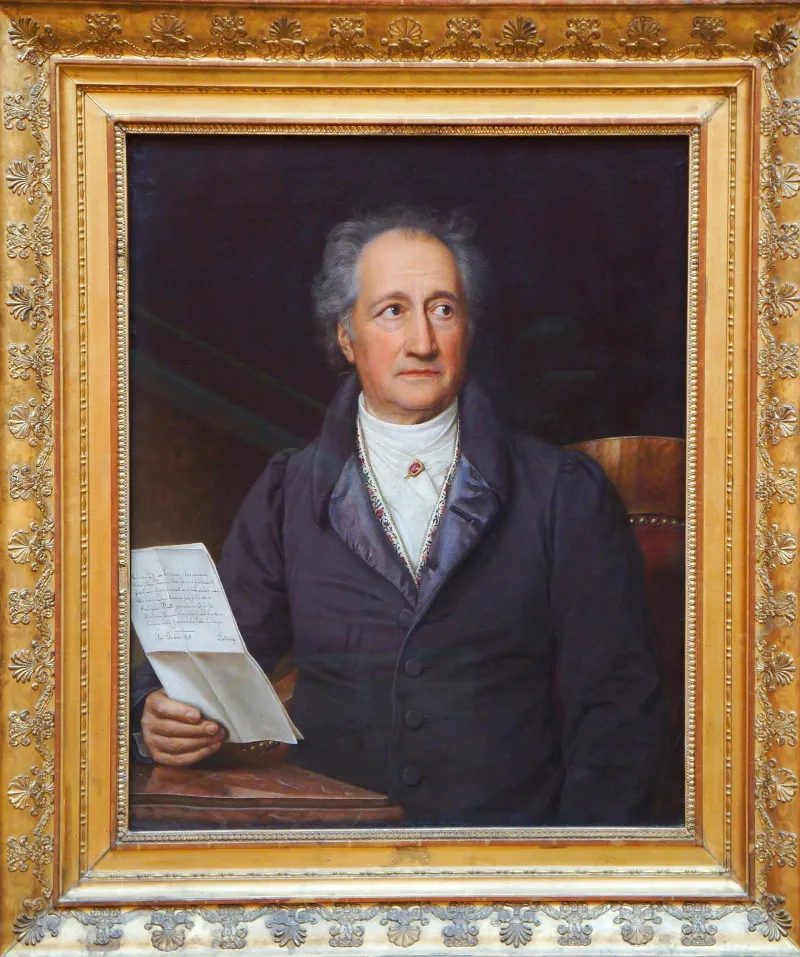

The encounter
In 1814 Goethe read Joseph von Hammer-Purgstall’s complete translation of the Divan of Hafez (14th century, Shiraz). He recognised himself in the distant poet and began writing poems in the spirit of Persian lyric. The “West-Eastern Divan” appeared in 1819.
In common
Both join love, wine and wisdom with religious depth, and both love masks and roles. In the “Book of Hafez” Goethe holds a dialogue with his model and calls him his ‘twin’.
Difference
Hafez wrote in the strict ghazal form; Goethe only hinted at it and stayed with the German song. In the “Notes and Essays” he introduces Persian literature – Ferdowsi, Rumi, Saadi and Hafez.
Read the texts
Questions
- Who was Hafez?
- A 14th-century Persian poet from Shiraz, famous for his ghazals of love, wine and God, and Goethe’s model for the West-Eastern Divan.
Study this text with Goethe Academy ›
Goethe Write mode: write it yourself
- Put the texts you want to compare into the Research folder of a project.
- Write your comparison in the manuscript next to them.
- Save a snapshot before every big change and compare the snapshots side by side.
Writing a book of your own? Goethe Write gives it chapters, an outline, a timeline and characters – on the Mac, iPhone and iPad. All features ›