

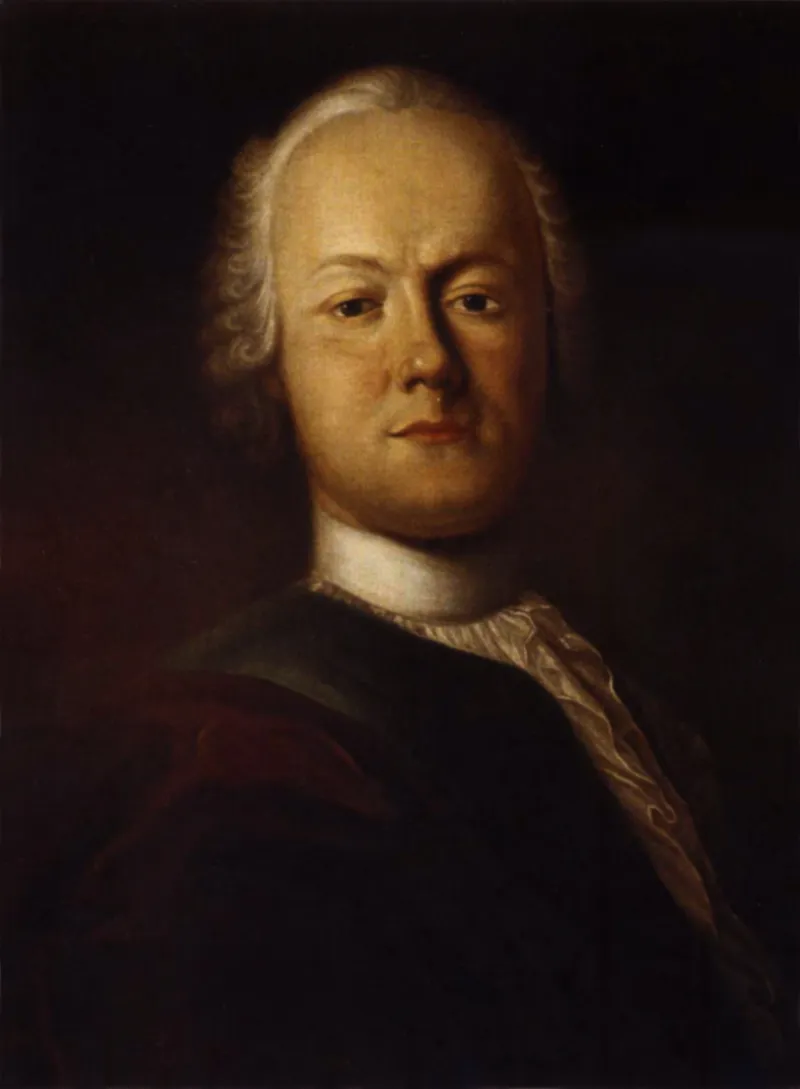
Friedrich Gottlieb Klopstock was the most revered German poet of the mid-eighteenth century. His religious epic The Messiah (1748–73) and his odes in free classical metres opened German poetry to passion and sublimity. The Goethe children learned the Messiah by heart in secret, and Lotte and Werther's famous moment at the window – 'Klopstock!' – made him a password of feeling.
Klopstock visited Goethe in Frankfurt in October 1774. In 1776 he wrote Goethe a warning letter about his wild life with the duke in Weimar; Goethe answered coolly, and the relationship ended. Klopstock died in Hamburg in 1803.
Klopstock's Messiah (1748–73) and his odes made him the most revered German poet of the mid-eighteenth century; Werther and Lotte famously sigh his name during a thunderstorm. He met Goethe in Frankfurt in 1774 and found him congenial. In May 1776, however, he wrote to Goethe warning that the wild life at the Weimar court was harming the young duke; Goethe replied curtly, and Klopstock broke off contact. He lived in Hamburg from 1770 and died there on 14 March 1803, and his funeral was a great public event.
Goethe always acknowledged Klopstock's historical importance for German poetry.
His grave in Ottensen is still visited.
Importance for Goethe
Friedrich Gottlieb Klopstock, poet of the “Messiah”, was the great idol of Goethe’s youth; in “Werther” the single word “Klopstock!” is enough for Werther and Lotte to understand each other. Goethe met him in person in Frankfurt in 1774.
In 1776 Klopstock sent Goethe a letter of warning about the wild life at the Weimar court and its effect on the duke. Goethe rejected it coolly, and the relationship ended. His respect for Klopstock’s importance remained, as “Poetry and Truth” shows.
Goethe drew his characters from people he knew. Goethe Write keeps your characters, their notes and relationships together. All features ›
Goethe Write mode: write it yourself
- Create a character with a character sheet: role, age, goal, conflict and notes.
- Link your characters to each other in the relationships view, as Goethe’s life links the people around him.
- Place events on the timeline and see who meets whom, and when.
Questions
- Why is Klopstock mentioned in Werther?
- In the thunderstorm scene Lotte says his name, and Werther knows at once she is thinking of Klopstock’s ode “The Celebration of Spring”.
- Why did Goethe and Klopstock fall out?
- In 1776 Klopstock criticised by letter Goethe’s influence on the young duke; Goethe rejected the interference.
Text sources
- DuW I 2, IV 15
- Klopstock to Goethe, 8 May 1776