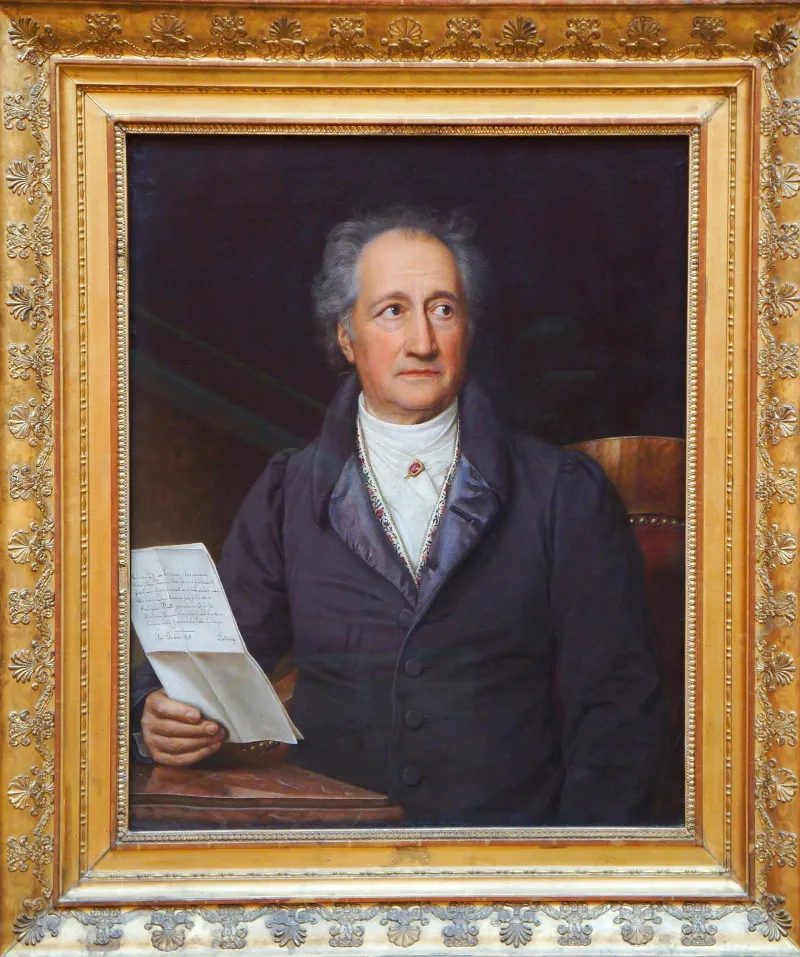

François de Théas, comte de Thoranc, came from Grasse in Provence and served as an officer in the French army. During the French occupation of Frankfurt in the Seven Years' War he was king's lieutenant (lieutenant du roi), responsible for relations between the army and the civilian population, and from January 1759 he was billeted in the Goethe house.
In Poetry and Truth Goethe paints a memorable portrait of him: grave, melancholy, scrupulously just, courteous to the children and fond of art. Thoranc commissioned a series of paintings from Frankfurt artists – Seekatz, Trautmann, Schütz, Junker and others – for his house in Grasse, and had them hung in the rooms of the Goethe house while they were being painted, so that the boy watched artists at work. The father's hostility to the French guest led to a dangerous scene after the battle of Bergen, defused by the interpreter.
Thoranc left Frankfurt in 1761. Some of the paintings he commissioned survive in Grasse and Frankfurt. His figure became, through Goethe's description, the classic image of the honourable enemy officer in German literature.
The paintings Thoranc ordered for his house in Grasse – landscapes, genre scenes and decorative panels by Seekatz, Trautmann, Schütz, Hirt and Junker – were partly dispersed later; some have since been acquired for the Frankfurt Goethe House. Goethe's portrait of the count in Poetry and Truth is affectionate and dramatic; how far it reflects the man's character rather than the memory of a ten-year-old is uncertain.
Importance for Goethe
Count Thoranc, the French King’s Lieutenant, lived in the Goethe house from 1759 to 1761 during the French occupation of Frankfurt. For Wolfgang, aged ten to twelve, he opened a new world: Frankfurt painters worked on commissions for him in the house, and the boy watched them.
At the same time Goethe went to the French theatre in Frankfurt and learned French there. His father resented the billeting and quarrelled with the count. In “Poetry and Truth” (Book Three) Goethe tells the episode at length and with evident sympathy for Thoranc.
Goethe drew his characters from people he knew. Goethe Write keeps your characters, their notes and relationships together. All features ›
Goethe Write mode: write it yourself
- Create a character with a character sheet: role, age, goal, conflict and notes.
- Link your characters to each other in the relationships view, as Goethe’s life links the people around him.
- Place events on the timeline and see who meets whom, and when.
Questions
- Who was Count Thoranc?
- A French officer billeted in the Goethe house in Frankfurt in 1759–1761, who had painters work for him there.
- Where does Goethe write about Thoranc?
- In Book Three of “Poetry and Truth”.
Text sources
- DuW I 3